Antarctic first · Built in India

Delhi to Antarctica: 12,000 km, one ultrasound scan

Doctors at AIIMS New Delhi guided a robotic arm to carry out a live ultrasound scan at India’s Maitri research station in Antarctica — a world first. Now Pura Foundation is the sole sponsor of the next stage, Experiment 2, for 18 months: the research that brings this Indian technology closer to villages that have never had a specialist scan.
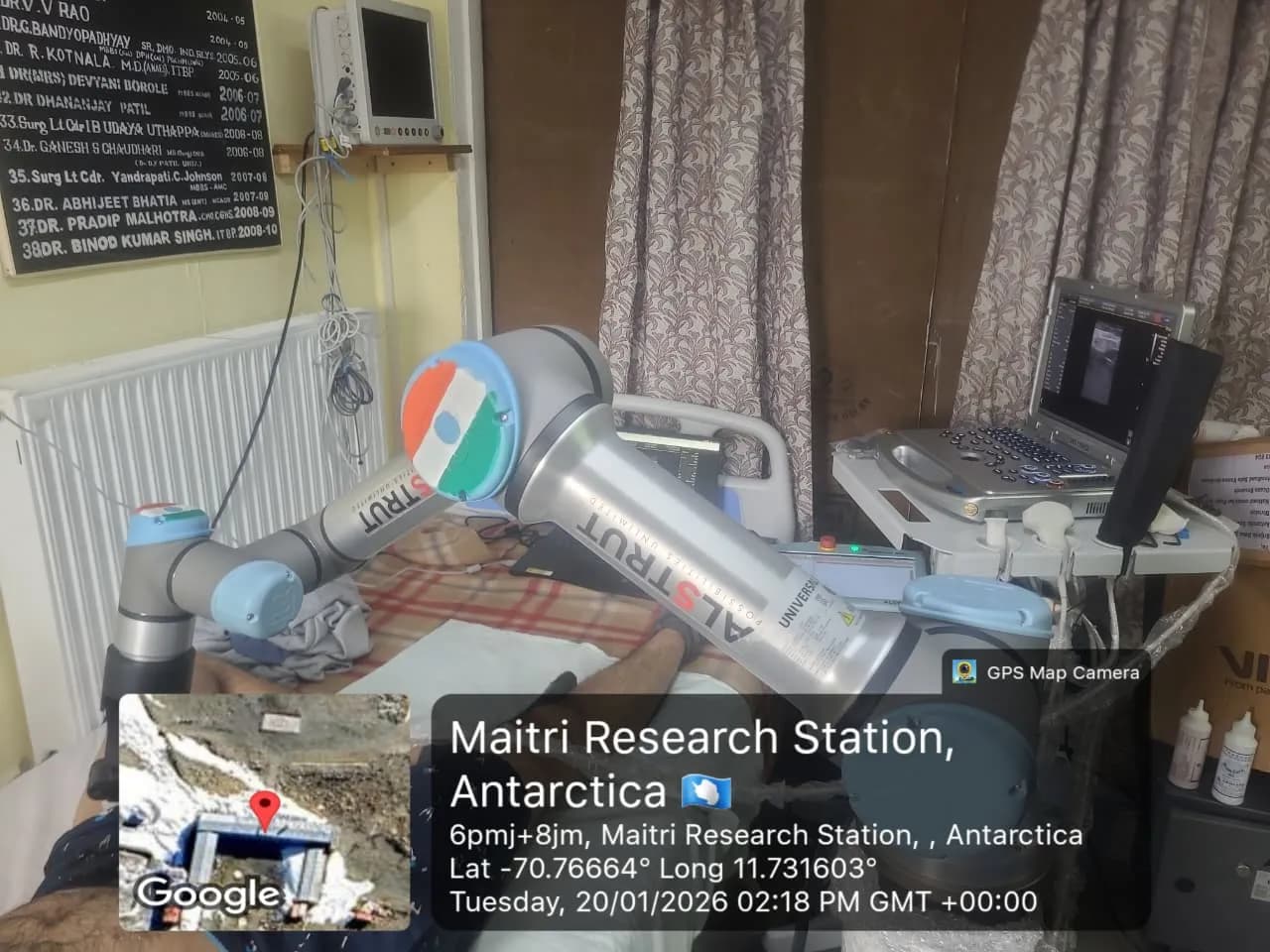
The robotic arm scanning a patient at Maitri research station in AntarcticaAntarctica · patient side
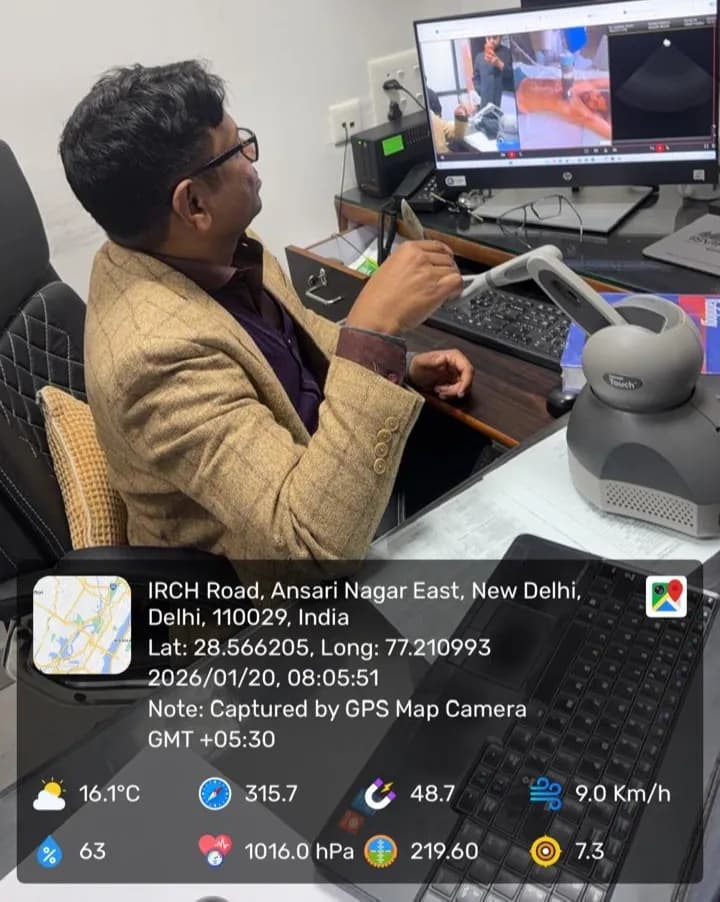
A doctor at a desk guiding a haptic controller while watching the live scan on screenNew Delhi · doctor
Both photographed on 20 January 2026: the robotic arm at Maitri, Antarctica, and the doctor at AIIMS New Delhi.
12,000+ kmBetween the doctor in New Delhi and the patient in Antarctica
World firstTele-robotic diagnostics at an Antarctic research station
18 monthsExperiment 2 — sponsored solely by Pura Foundation

“World first” as stated by the Director of NCPOR, in a Government of India press release (PIB, 16 February 2026).

Why it matters

The scan is simple. Reaching the specialist is not.

Ultrasound is how many of the problems we see at our camps are caught early — a complicated pregnancy, an abdominal complaint, a swelling in the neck. The machine is portable. The expertise to guide the probe and read the image is not: radiologists work in city hospitals.

For a family in a village, a scan can mean a bus journey, a lost day’s wages and a long queue — so it is put off until it becomes an emergency. If a doctor in Delhi can scan a patient in Antarctica, a doctor in a city hospital can scan a mother in a village clinic.
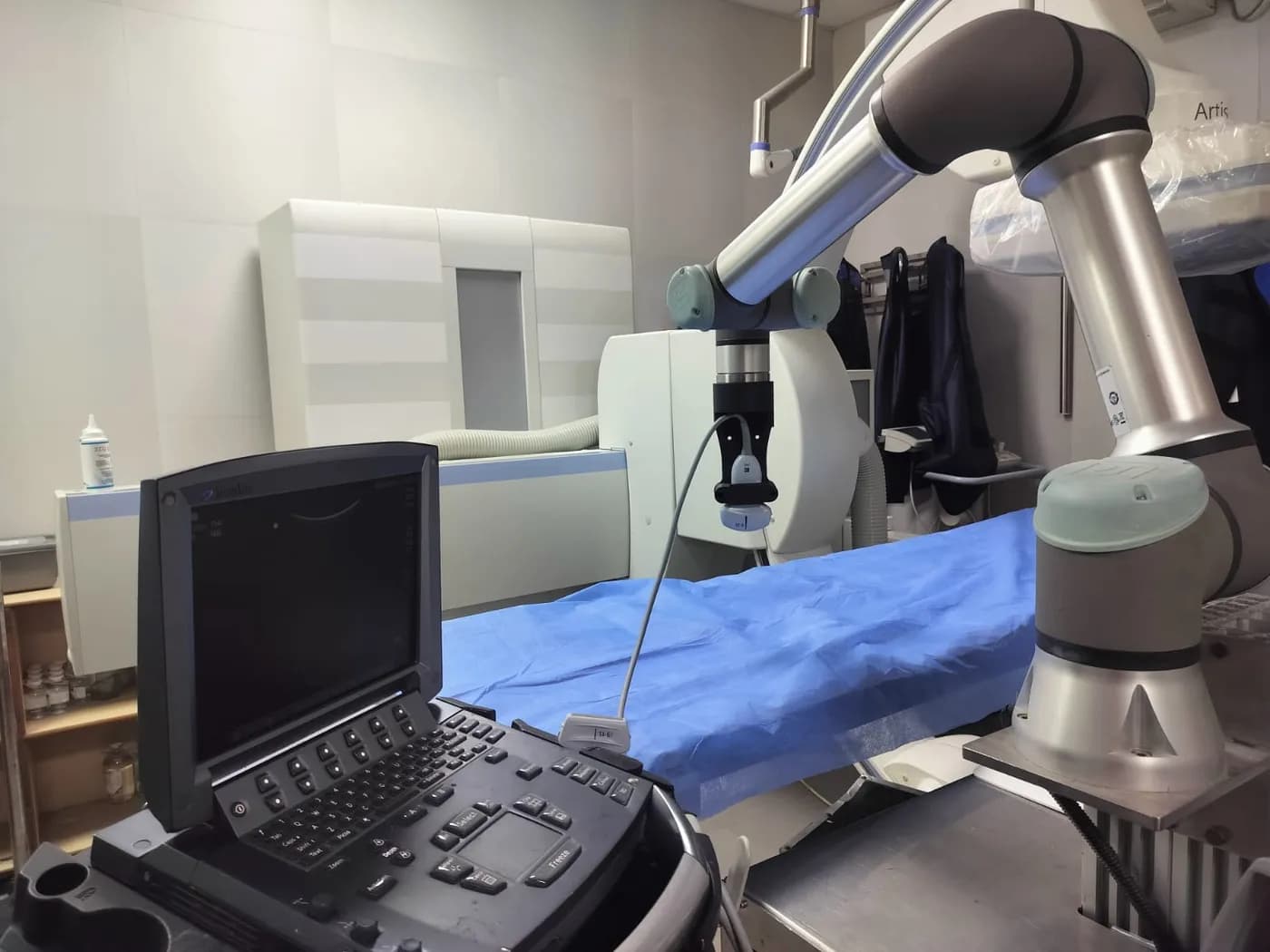
A robotic arm holding an ultrasound probe over an examination table, beside an ultrasound machine
The patient-side robotic arm, at AIIMS New Delhi.

How it works

The doctor in one place, the patient in another

  1. At the patient’s sideA robotic arm holds a standard ultrasound probe beside the patient at a local centre. No specialist needs to be in the room.
  2. At the doctor’s deskA radiologist, perhaps thousands of kilometres away, moves a haptic controller. The arm follows with full six-degree-of-freedom movement, and force feedback lets the doctor feel the probe’s contact — the “feel” of a bedside exam.
  3. Over a secure linkControls and live images travel over a secure connection in real time, built to stay steady when bandwidth and delay vary.
  4. A specialist’s readingThe patient has a scan guided and read by a specialist, without the journey to a city hospital.

Scans demonstrated so far

Abdominal screeningMusculoskeletal imagingThyroid and soft-tissue scansDoppler (blood-flow) studies
A doctor at a desk guiding a haptic controller while watching the live scan on screen
The doctor’s station — a haptic controller and the live scan — at AIIMS New Delhi.

The journey so far

From a prototype to Antarctica — and next, rural India

  1. A working prototypeAn end-to-end system — patient-side probe control, doctor-side control and live imaging — demonstrated working as one.
  2. Trials at AIIMS New DelhiTrials at different locations across the AIIMS campus showed the workflow holds up outside a controlled lab.
  3. Antarctica — a world firstClinicians at AIIMS New Delhi carried out live ultrasound scans at Maitri, India’s research station in Antarctica, more than 12,000 km away: the first known tele-robotic diagnostic system at an Antarctic research station anywhere in the world. It proved real-time control over a thin, uneven link — the same conditions a remote village presents.
  4. Experiment 2 — sponsored by Pura FoundationThe next stage takes the India–Antarctica ultrasound module further, building the evidence the technology needs before it can be licensed for use in rural India. Pura Foundation is its sole sponsor.
The robotic arm scanning a patient at Maitri research station in Antarctica
Maitri research station, Antarctica, January 2026.
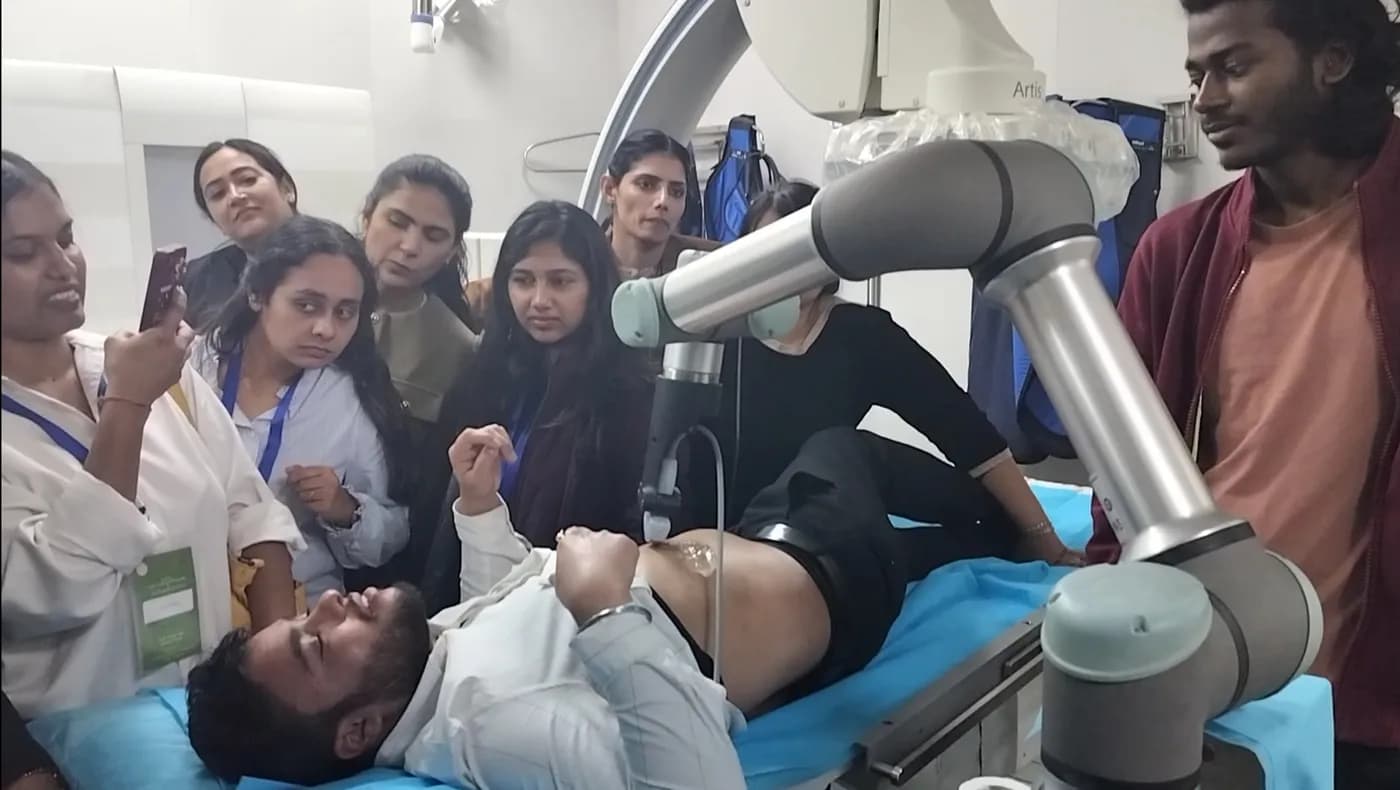
Students watching the robotic arm scan a volunteer at AIIMS New Delhi
A trial at AIIMS New Delhi.

Photographs courtesy of ViTachyon Robotics.

A bold step for a rural health trust

Why Pura Foundation is backing it

A small foundation in rural Karnataka does not usually sponsor a robotics experiment. We have, because the gap this technology closes is the one we see at every camp.

The only foundation to step forward

When Experiment 2 needed a sponsor, Pura Foundation was the only foundation to come forward. We are now its sole sponsor for the next 18 months.

Our own funds, first

We have committed the trust’s own funds to Experiment 2. Every rupee given to the mission adds to that commitment and is spent only on this research.

The road to rural India

A licence for use is what turns a world first into a scan in a village. Once it is approved, our health camps across 45 rural communities are where we aim to bring it first.

Donate to the mission

Your contribution

Be part of India’s next medical milestone

An Indian team has already scanned a patient in Antarctica from New Delhi. Experiment 2 is the step between that world first and a scan in a rural clinic — and your gift today helps carry it there, before it is ever offered to the public.

Where it stands today. Experiment 2 is research. The system is not yet approved for clinical use or commercial sale, and it is not used to diagnose patients at our camps today — winning that approval for rural use is what this research is for.

The people behind it

  • Siddharth GuptaFounder & CEO
  • Udayan BanerjeeCo-founder & CTO
  • Prof. S.K. SahaAdviser · Robotics, IIT Delhi
  • Dr. Chandrashekhara S.H.Adviser · Radiology, AIIMS New Delhi

Built and demonstrated with

IIT Delhi, through the I-Hub Foundation for Cobotics (IHFC) · AIIMS New Delhi · National Centre for Polar and Ocean Research, Ministry of Earth Sciences · Rajiv Gandhi Super Speciality Hospital · Department of Science & Technology, Government of India

Delhi to Antarctica — India’s tele-robotic ultrasound mission · Pura Foundation